A kitchen can have beautiful countertops, expensive cabinets, and high-end appliances, yet still feel uncomfortable to use because of poor lighting. Dark prep areas, awkward shadows, and harsh overhead lights can make even simple cooking tasks frustrating. Most homeowners only notice how much lighting affects the kitchen after spending time in a space that actually feels balanced and functional.
Good cabinet lighting changes more than appearance. It improves visibility, movement, comfort, and the overall atmosphere of the room. The right setup can make a kitchen feel larger, calmer, and easier to work in without requiring a full remodel. That’s why cabinet lighting has become one of the smartest upgrades in home improvement return on investment conversations, especially for homeowners looking to improve daily functionality without major structural changes.
Why Cabinet Lighting Matters More Than Most People Expect

Many kitchens rely too heavily on ceiling lighting alone. While overhead fixtures provide general illumination, they often create shadows directly where people prep food or work most frequently.
Cabinet lighting solves that problem by adding layered lighting closer to functional areas. This improves both kitchen visibility and workflow efficiency while making the space feel more intentional overall.
Good lighting also changes how the kitchen feels emotionally. Warm lighting creates a calmer atmosphere, while brighter neutral tones improve focus during cooking and cleaning.
This balance becomes especially important during cabinet design planning because lighting placement affects both aesthetics and long-term usability.
Under-Cabinet Lighting Improves Everyday Workflow
Under-cabinet lighting remains one of the most practical upgrades for modern kitchens because it directly improves task visibility.
LED strip lighting installed beneath upper cabinets eliminates shadows across countertops, making food prep, cooking, and cleanup easier. Homeowners often underestimate how much smoother kitchens feel once work surfaces are properly illuminated.
Popular options include:
- dimmable LED strip lights
- COB LED lighting
- low-profile puck lights
- wireless motion-sensor lights
COB LED strips have become especially popular because they create smoother, more even light distribution compared to older segmented LED styles.
Dimmable systems also provide flexibility. Bright settings work well for cooking and prep work, while softer settings help create a more relaxed evening atmosphere.
In-Cabinet Lighting Adds Depth Without Feeling Overdone
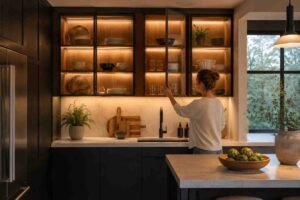
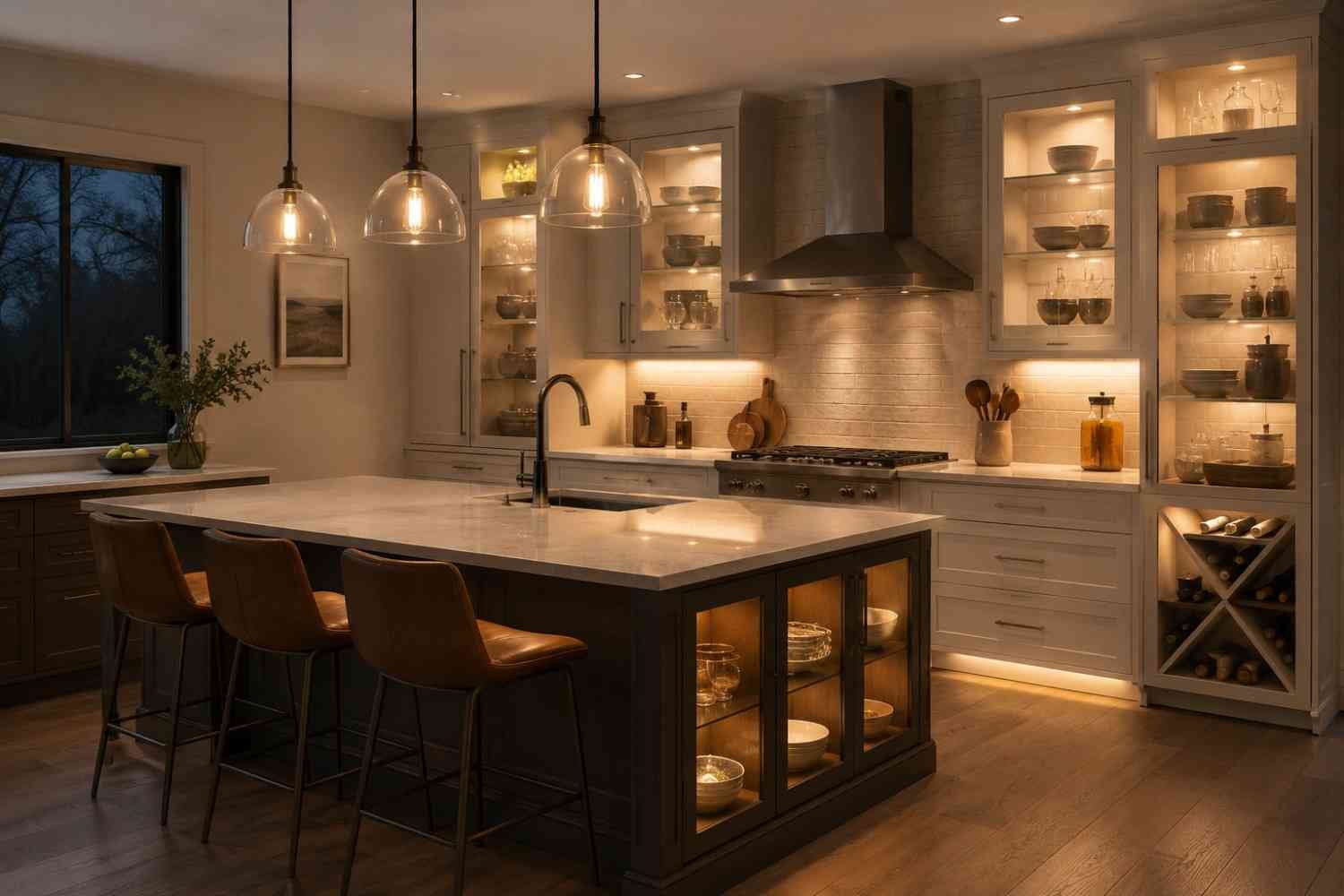
Glass-front cabinets and open shelving can sometimes disappear visually in darker kitchens. Interior cabinet lighting helps solve that issue while adding subtle depth and warmth.
Vertical LED strips or small recessed spotlights work especially well inside display cabinets because they highlight textures, dishware, and decorative pieces without overwhelming the space.
This type of accent lighting works best when used selectively rather than throughout the entire kitchen.
Many homeowners also appreciate how interior lighting reduces the need to turn on bright overhead fixtures during quieter evening hours. The softer glow creates a calmer environment while still improving visibility.
Lighting inside pantry cabinets can also improve organization by making ingredients and storage areas easier to navigate quickly.
Toe-Kick Lighting Creates a Softer Kitchen Atmosphere
Toe-kick lighting has become increasingly popular because it changes how kitchens feel at night without drawing too much attention to itself.
Installed beneath lower cabinets near the floor, this lighting creates a subtle floating effect while improving nighttime visibility.
Beyond aesthetics, toe-kick lighting can also support:
- safer nighttime movement
- reduced glare
- softer ambient lighting
- better visual depth
- improved kitchen navigation
Warm LED tape lighting works especially well here because it creates atmosphere without making the kitchen feel overly bright.
This type of lighting also fits naturally into broader layered lighting design strategies commonly discussed across interior design and remodeling resources.
Above-Cabinet Lighting Can Make Kitchens Feel Larger
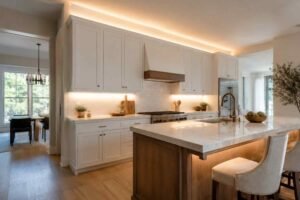
One cabinet lighting idea many homeowners overlook is above-cabinet illumination.
Lighting positioned above upper cabinets washes the ceiling with soft light, helping kitchens feel taller and more open visually. This works especially well in kitchens with limited natural light or darker cabinetry finishes.
Warm white lighting tends to perform best for this purpose because it creates a softer reflective glow instead of harsh brightness.
Above-cabinet lighting also reduces visual heaviness, especially in kitchens with tall cabinetry extending close to the ceiling.
The effect often feels subtle during the day but becomes much more noticeable in the evening.
Choosing the Right Color Temperature Changes Everything
Lighting temperature affects kitchens more than people realize.
Warm white lighting around 2700K to 3000K usually creates a softer and more welcoming atmosphere. Neutral or cooler lighting between 3500K and 4500K often improves visibility during meal prep and detailed tasks.
The best approach is usually to combine both strategically:
- warmer lighting for ambiance
- cooler lighting for task-focused areas
This creates balance instead of forcing the kitchen into feeling either too clinical or too dim.
Many homeowners regret installing overly cool lighting because it can make kitchens feel sterile rather than comfortable.
Smart and Motion-Sensor Lighting Is Becoming More Practical

Smart kitchen lighting used to feel overly complicated for average homeowners, but modern systems have become far more practical and accessible.
Motion-sensor cabinet lighting works especially well for:
- pantry cabinets
- nighttime kitchen access
- under-sink storage
- deep drawers
- walk-in pantry spaces
Smart dimming systems also help reduce energy consumption management concerns by adjusting brightness automatically depending on usage.
Wireless options have improved significantly as well, making installation easier for homeowners who do not want extensive rewiring.
Small Lighting Choices Often Have the Biggest Impact
One thing many homeowners realize after upgrading cabinet lighting is that kitchens begin functioning differently almost immediately. Prep areas become easier to use, movement feels smoother, and the space itself becomes more inviting during both busy mornings and quieter evenings.
Good cabinet lighting works best when it quietly supports daily life instead of demanding attention. The most successful kitchens are rarely the brightest ones. They are usually the spaces where lighting feels balanced, natural, and comfortable throughout the day.
FAQs: Cabinet Lighting Ideas That Improve Kitchen Ambiance and Workflow
1. What is the best type of cabinet lighting for kitchens?
Under-cabinet LED strip lighting is often considered the best option because it improves countertop visibility and supports everyday kitchen tasks effectively.
2. Are warm or cool lights better for kitchens?
Warm white lighting creates a cozier atmosphere, while cooler lighting improves task visibility. Many kitchens benefit from combining both strategically.
3. Does cabinet lighting increase home value?
Well-designed cabinet lighting can improve perceived kitchen quality and may contribute positively to overall home improvement return on investment during remodeling.
4. Are wireless cabinet lights reliable?
Modern wireless LED lighting systems have improved significantly and work well for smaller upgrades, pantry lighting, and motion-sensor installations.
The Best Kitchen Lighting Rarely Feels Obvious
The most effective cabinet lighting does not overpower the room or make the kitchen feel staged. Instead, it quietly improves how the space functions every day. Better visibility, softer ambiance, and more balanced lighting often make kitchens feel more comfortable without homeowners immediately realizing why.
That’s usually the sign of good design. When lighting supports cooking, movement, and atmosphere naturally, the kitchen starts feeling easier to live in long after the excitement of renovation fades.