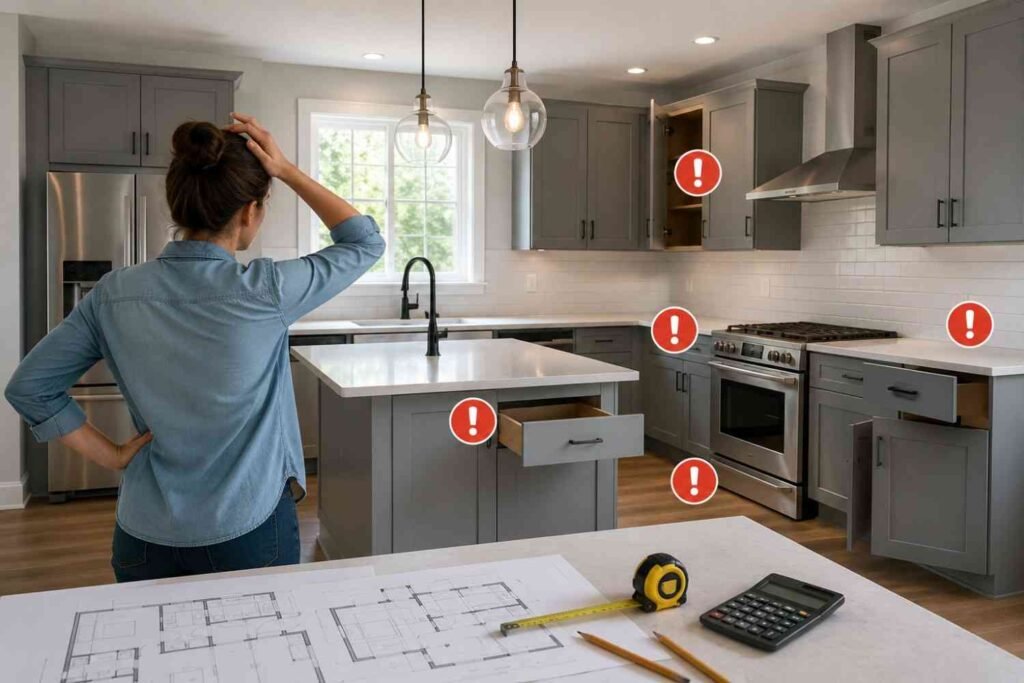
Most people imagine the fun part of a kitchen remodel first. The cabinet colors, the hardware finishes, the clean countertops, and the perfectly organized drawers. But once the kitchen is actually in use, the real problems start showing up. Suddenly the fridge door blocks the walkway. Drawers collide with each other. Small appliances barely fit under the upper cabinets. The kitchen may look beautiful, but it feels frustrating to use.
That usually happens because the cabinet design planning stage focused more on appearance than function. A kitchen is one of the hardest-working spaces in a home. Every cabinet placement decision affects movement, storage, comfort, and daily routines. Small layout mistakes can quietly create problems that homeowners deal with for years after the remodel is finished.
Poor Traffic Flow Can Make A Kitchen Feel Smaller

A kitchen should feel easy to move through, especially during busy mornings or family dinners. When cabinets, islands, and appliances are placed too closely together, the space quickly starts feeling crowded and inefficient.
One of the most common mistakes is treating the kitchen island as a design centerpiece without thinking about how people actually move around it.
Tight Walkways Around The Island
Many kitchens leave less than 42 inches between the island and surrounding cabinets. On paper, it may seem acceptable. In reality, it creates constant interruptions.
Someone opens the dishwasher while another person tries walking behind them. A refrigerator door swings open and blocks the entire path. These small frustrations build up fast in everyday use.
Refrigerator Placement That Blocks Movement
Refrigerators naturally extend beyond standard cabinet depth. If they are installed too close to nearby cabinetry or narrow walkways, the entire kitchen flow becomes awkward.
This problem becomes even more noticeable in smaller kitchens where every inch matters.
Cabinet Doors That Crash Into Each Other
Corner cabinets and perpendicular drawers are often poorly planned. Once installed, homeowners realize that multiple doors cannot open at the same time without hitting handles or hardware.
It sounds minor until it starts happening several times a day.
Deep Lower Cabinets Become Storage Black Holes

Deep fixed shelves inside lower cabinets often create more frustration than convenience. Items slowly disappear into the back, and eventually, people stop using the space properly.
Drawers are usually far more functional because they keep everything visible and accessible without crouching down to search for cookware.
Forgetting Vertical Storage
Tall, narrow storage areas are often ignored during kitchen cabinet planning. Later, homeowners realize they have nowhere practical to store baking trays, cutting boards, cooling racks, or serving platters.
Vertical storage solutions help reduce clutter without increasing the kitchen footprint.
Poor Corner Cabinet Planning
Corner cabinets remain one of the most wasted areas in many kitchens. Without proper pull-out systems or rotating storage, those spaces become difficult to access and easy to forget about.
Good cabinet planning should make every section of the kitchen usable.
Designing Around Trends Instead Of Habits
Open shelving and decorative storage may look attractive online, but they do not always work well in real homes.
The best kitchen layouts are built around actual cooking habits, daily routines, and long-term convenience rather than temporary trends.
Clearance Mistakes That Create Daily Frustration

Some cabinet mistakes are not obvious until installation is complete. Unfortunately, those are often the most expensive problems to fix later.
One common issue is blocking appliance doors. Cabinets installed too close to ovens, dishwashers, or refrigerators can prevent doors from opening fully. Another mistake is forgetting trim clearance beside walls, which stops drawers and pull-outs from opening properly.
Here are some common clearance mistakes homeowners regret later:
- Pantry doors are hitting nearby lighting fixtures
- Pull-out trash cabinets are colliding with appliances
- Oven doors opening directly into walkways
- Fridge doors are blocking nearby drawers
- Deep drawers are unable to clear the wall trim properly
Good cabinet design planning should account for movement from every angle before installation begins.
Poor Ergonomics Can Make Cooking Uncomfortable

A kitchen should not feel physically exhausting to use. But poorly planned cabinet heights and layouts can quietly create strain during everyday tasks.
Upper Cabinets Mounted Too Low
Upper cabinets installed too close to countertops reduce usable prep space and make kitchens feel cramped.
Small appliances barely fit underneath, and prep work becomes uncomfortable in tighter areas.
Incorrect Countertop Height
Standard countertop height exists for comfort and usability. Deviating too far from that height can create unnecessary strain on the back, shoulders, and wrists during cooking or meal preparation.
This issue becomes more noticeable for people who spend a lot of time in the kitchen.
Ignoring The Kitchen Work Triangle
The relationship between the sink, refrigerator, and stove still matters in modern kitchens. When cabinets interrupt those pathways, cooking becomes slower and less efficient.
A good kitchen layout should support movement naturally rather than forcing unnecessary steps.
Lighting And Technical Oversights Often Get Ignored

Cabinet planning involves more than just storage and appearance. Lighting, ventilation, and utility access play a major role in how functional the kitchen feels over time.
Another overlooked issue is covering plumbing shutoffs, gas lines, or electrical access points behind fixed cabinetry. These technical details may not seem important during the design stage, but they become critical during repairs or future upgrades.
Some homeowners focus heavily on cosmetic improvements and affordable cabinet upgrades without realizing that layout efficiency matters far more than surface finishes. A kitchen functions best when cabinet placement supports storage, comfort, lighting, and movement together.
FAQs: Cabinet Design Planning Mistakes That Can Ruin Your Kitchen Layout
1. What is the biggest cabinet design planning mistake?
Poor traffic flow is one of the biggest mistakes. Tight walkways, blocked appliance doors, and awkward cabinet placement can make the kitchen feel frustrating to use every day.
2. How much space should be around a kitchen island?
Most functional kitchens leave at least 42 inches between the island and surrounding cabinets to allow comfortable movement and appliance access.
3. Are drawers better than deep lower cabinets?
In many cases, yes. Drawers improve accessibility and organization because items remain visible instead of getting lost in the back of deep shelves.
4. Why is the kitchen work triangle still important?
The kitchen work triangle improves efficiency between the sink, stove, and refrigerator. A poorly planned layout creates extra movement and slows down cooking tasks.
Final Thoughts
Cabinet mistakes tend to stay hidden during the excitement of a remodel. Most homeowners do not notice the problems until they start living in the space every day. That is when poor spacing, awkward storage, blocked walkways, and uncomfortable layouts begin affecting simple routines. These issues may seem small individually, but together they can completely change how functional a kitchen feels.
Thoughtful cabinet design planning creates a kitchen that supports daily life naturally. The best layouts are not only visually appealing. They feel comfortable, organized, and effortless to use for years after the remodel is complete.