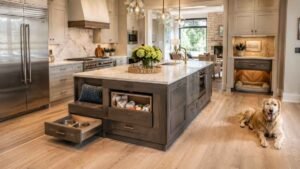
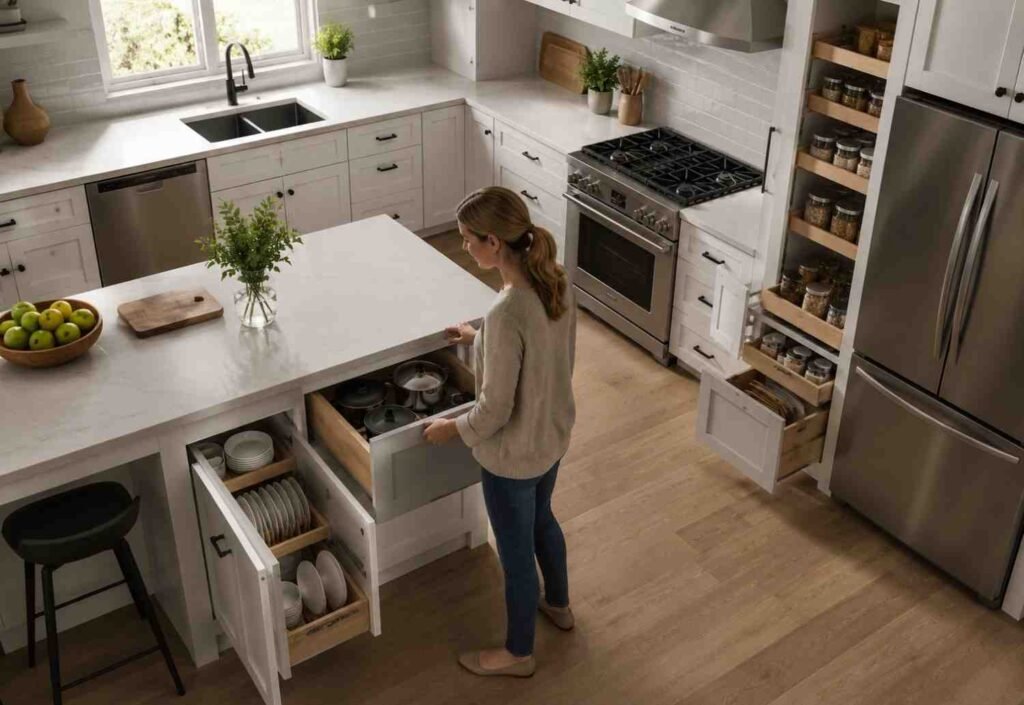
A kitchen can look beautiful in photos and still feel frustrating to use every single day. That usually becomes obvious during busy mornings, rushed dinners, or weekends when multiple people are trying to move around at once. Cabinets start feeling cramped, cookware becomes difficult to reach, and somehow the one thing you need always ends up buried behind everything else.
A lot of homeowners realize too late that kitchen functionality depends less on expensive finishes and more on layout decisions. Practical cabinet layouts quietly shape how smoothly a kitchen works. The right setup improves storage, movement, meal prep, and even cleaning routines without needing a massive space or luxury renovation budget.
Why Cabinet Layout Matters More Than Most People Expect
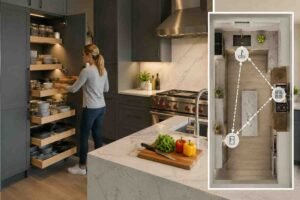
Many kitchen remodeling ideas focus heavily on appearance, but layout affects daily life far more than trendy finishes. A poorly planned kitchen forces unnecessary movement, creates clutter, and slows down basic tasks.
Practical cabinet layouts improve workflow by keeping important zones connected. That includes the sink, refrigerator, and cooking area, often referred to in kitchen design as the “work triangle.” When these areas sit within comfortable reach, kitchens naturally feel easier to use.
Good cabinet planning also reduces visual stress. When storage works properly, countertops stay clearer, cooking feels less chaotic, and cleaning becomes faster.
That’s one reason homeowners often prioritize modern kitchen cabinets that combine clean aesthetics with smarter storage functionality instead of purely decorative designs.
L-Shaped Layouts Work Well for Everyday Kitchens
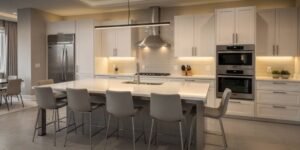
L-shaped kitchens remain one of the most practical cabinet layouts because they create a strong workflow without making the kitchen feel crowded.
Using two connected walls, this design naturally separates prep space, cooking space, and storage areas while still keeping everything within reach.
L-shaped layouts work especially well because they:
- maximize corner usage
- improve traffic flow
- create flexible movement
- leave room for dining areas or islands
They also adapt easily to both small and medium-sized kitchens.
One reason many homeowners prefer this layout is that it feels open without sacrificing storage. Kitchens stay functional while still allowing enough space for multiple people to move comfortably.
Galley Kitchens Can Be Surprisingly Efficient
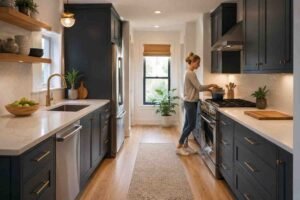
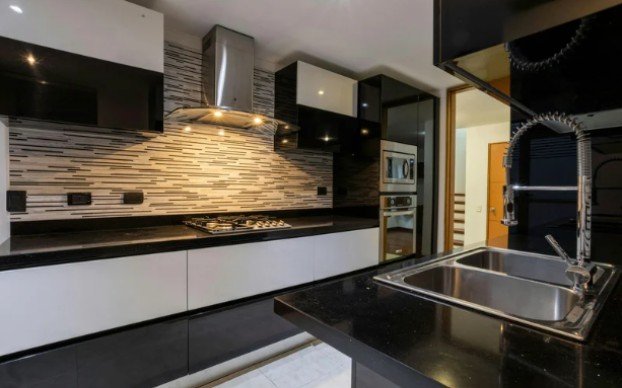
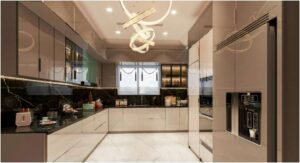
Galley kitchens sometimes get overlooked because they are commonly associated with smaller homes or apartments, but they are often incredibly efficient when designed properly.
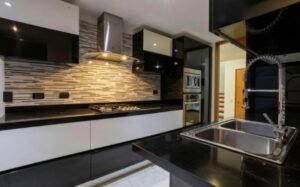
With two parallel counters facing each other, galley layouts reduce unnecessary movement while cooking. Everything stays within close reach, which makes meal prep faster and more organized.
The biggest advantage is storage density. Galley kitchens maximize cabinet space without requiring large floor plans.
Smart additions often improve this layout significantly:
- deep storage drawers
- vertical pantry cabinets
- pull-out spice racks
- overhead storage
- slim appliance garages
Good lighting also matters in galley kitchens because brighter spaces prevent the layout from feeling narrow or enclosed.
U-Shaped Kitchens Create Strong Workflow
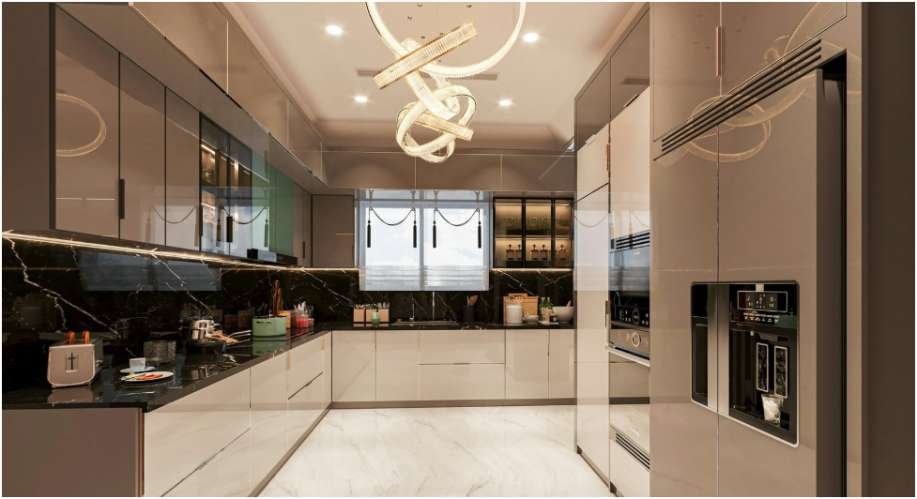
For homeowners who prioritize storage and countertop space, U-shaped kitchens often deliver the best balance of functionality and organization.
This layout surrounds the user on three sides, allowing cabinets, appliances, and prep areas to stay closely connected. Many people find U-shaped kitchens especially practical for cooking-heavy households because movement becomes extremely efficient.
One detail that improves usability is placing the sink and dishwasher near the center. That arrangement helps maintain a smoother cleanup flow while keeping cooking zones accessible.
U-shaped layouts also support:
- deep pantry storage
- extended countertop clearance
- appliance separation
- better kitchen zoning
- stronger organization systems
The layout works particularly well for families who spend a lot of time cooking at home instead of relying heavily on takeout or quick meals.
Deep Drawers Often Work Better Than Lower Cabinets
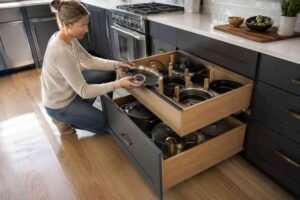
Traditional lower cabinets create one common problem: hidden storage frustration.
People end up crouching down, digging through stacks of cookware, and losing items in the back corners. Deep base drawers solve this issue much more effectively.
Large drawers improve accessibility because everything becomes visible from above. Pots, pans, mixing bowls, food containers, and heavy kitchen tools become easier to organize and reach.
This type of storage also supports better ergonomic kitchen design by reducing unnecessary bending and awkward movement.
Many homeowners who switch to drawer-based lower cabinets say it becomes one of the most noticeable improvements in daily kitchen use.
Corner Cabinets Should Never Become Dead Space
Corners are one of the most underused areas in many kitchens.
Without planning, corner cabinets often become clutter traps where items disappear for months. Practical cabinet layouts solve this problem using features like:
- lazy Susans
- pull-out corner systems
- swing-out shelving
- diagonal corner drawers
These systems improve accessibility while making difficult spaces more usable.
Corner storage matters even more in smaller kitchens where every inch of cabinet space counts.
Vertical Storage Makes Small Kitchens Feel Bigger

One of the smartest ways to improve kitchen storage ideas without expanding square footage is by using vertical space more effectively.
Tall pantry cabinets, ceiling-height cabinetry, and pull-out vertical racks create additional storage while keeping the footprint compact.
Vertical storage works especially well for:
- baking sheets
- pantry goods
- cutting boards
- cleaning supplies
- small appliances
Open shelving and glass-front cabinets can also help kitchens feel lighter visually. While fully open shelving sometimes becomes difficult to maintain, mixing a few open sections with closed cabinetry often creates a more balanced result.
Small Additions Can Improve Functionality Dramatically
Some of the most practical kitchen improvements are surprisingly simple.
Features like fold-down counters create temporary prep space without permanently crowding the room. Sliding or pocket cabinet doors also improve movement in tighter kitchens by reducing obstruction.
Above-refrigerator cabinets are another area many homeowners overlook. These spaces work well for:
- seasonal cookware
- serving trays
- decorative bowls
- less-used appliances
Small adjustments often create more noticeable improvements than large decorative upgrades because they directly affect daily routines.
FAQs: Practical Cabinet Layouts That Make Everyday Kitchens Easier to Use
1. What is the most practical kitchen cabinet layout?
L-shaped kitchens are often considered the most practical because they balance workflow, storage, and open movement efficiently for many home sizes.
2. Are deep drawers better than lower cabinets?
Yes, deep drawers usually improve accessibility and organization because they allow homeowners to see and reach items more easily without bending deeply.
3. How can small kitchens improve cabinet storage?
Small kitchens benefit from vertical storage, pull-out racks, tall pantry cabinets, and corner storage solutions that maximize limited space efficiently.
4. What cabinet features improve kitchen organization the most?
Pull-out drawers, lazy Susans, pantry organizers, vertical dividers, and overhead storage cabinets tend to improve organization the most in daily use.
The Best Kitchens Usually Feel Effortless to Use
The kitchens people enjoy most are rarely the ones with the flashiest finishes or trend-heavy designs. They are the spaces that quietly support daily routines without creating friction. Good cabinet layouts make cooking feel smoother, storage feel manageable, and movement feel natural.
That’s why practical kitchen design usually ages better than purely aesthetic trends. When cabinets improve how a kitchen functions every single day, the entire space becomes easier to live in long after renovation excitement fades.