I almost replaced my entire kitchen cabinets before realizing I would also destroy my backsplash, risk cracking my quartz countertops, and double my budget overnight. That single discovery completely changed how I approached my remodel.
The debate around cabinet refacing vs replacing is not just about aesthetics. It affects your timeline, demolition costs, countertop safety, kitchen functionality, and long-term resale value. The right choice depends on your cabinet structure, renovation goals, and how much disruption you can tolerate.
After helping friends through remodels and researching contractor pricing across multiple US markets, I found that many homeowners pay for full cabinet replacement when refacing would have delivered nearly the same visual transformation for thousands less.
What Is the Difference Between Cabinet Refacing and Replacing?
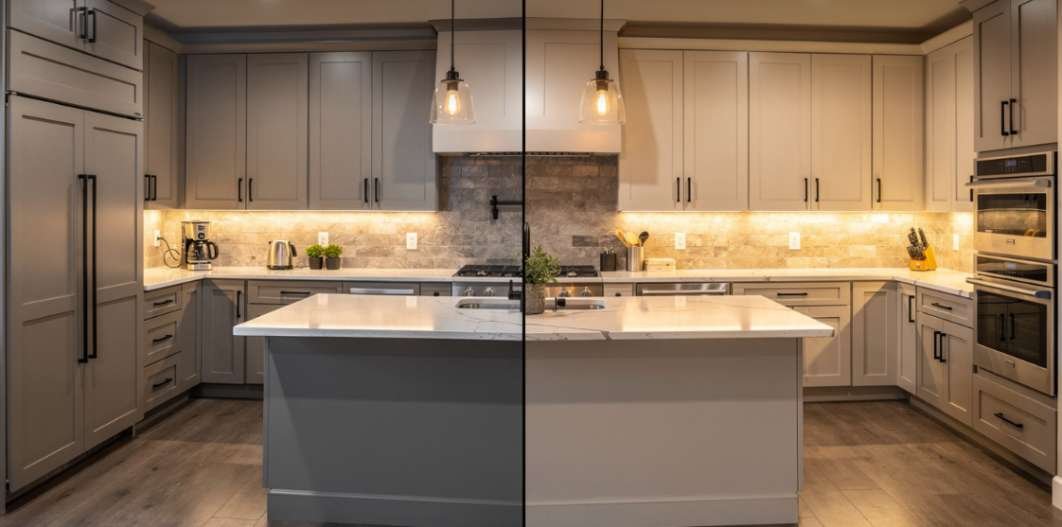
Cabinet refacing keeps your existing cabinet boxes but replaces visible components like doors, drawer fronts, and veneers. Cabinet replacement removes the entire cabinet structure and installs brand-new cabinetry from scratch.
That difference sounds simple, but it changes almost every part of the remodeling process.
Refacing focuses on cosmetic transformation. Replacement creates structural transformation.
If your kitchen layout already works well, refacing can produce a dramatic visual upgrade without ripping apart the room. If your cabinets are damaged or your workflow feels frustrating, replacement may be the better long-term investment.
Quick Comparison Table
| Feature | Cabinet Refacing | Cabinet Replacement |
| Average Cost | 30%–50% lower | High remodeling expense |
| Timeline | 2–5 days | 1–5 weeks |
| Layout Changes | No | Yes |
| Countertop Removal | Usually unnecessary | Often required |
| Backsplash Risk | Minimal | High |
| Demolition Waste | Low | Significant |
| DIY Difficulty | Moderate | High |
| Best For | Cosmetic upgrades | Full redesigns |
When Cabinet Refacing Is the Smarter Choice
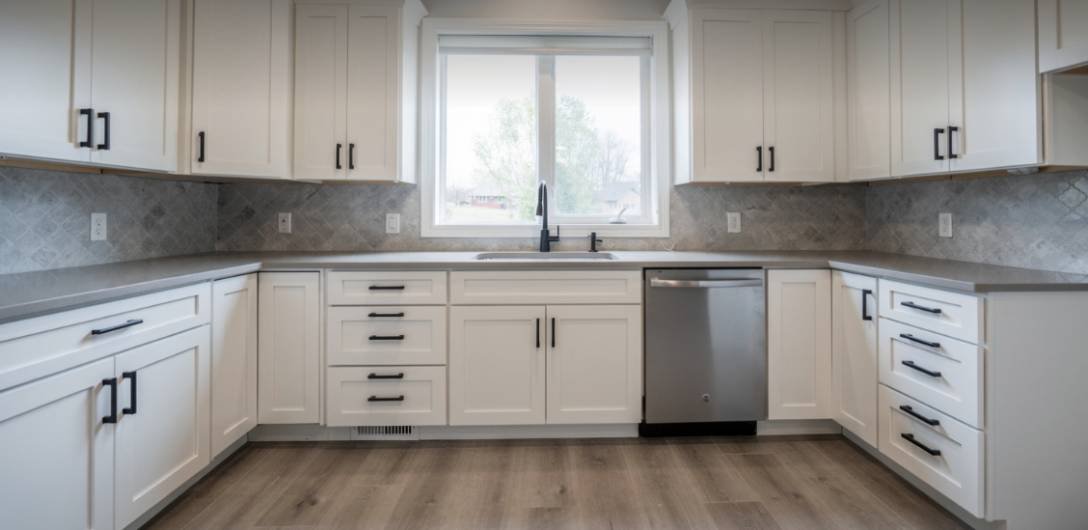
Your Existing Cabinet Boxes Are Still Solid
This is the biggest deciding factor.
If your cabinet frames are square, sturdy, and free from water damage, replacing them may waste perfectly usable materials. Many older cabinets were built from solid plywood that outperforms newer budget cabinetry.
I inspected a friend’s 1990s kitchen recently. The oak doors looked outdated, but the cabinet boxes were incredibly strong. Refacing transformed the kitchen without touching the countertops.
You Want to Protect Existing Countertops
This is where refacing becomes financially powerful.
Removing cabinet bases often forces contractors to detach heavy stone countertops. That process can crack granite, chip quartz, or destroy laminate seams.
Refacing avoids structural disturbance entirely because the existing cabinet boxes continue supporting the countertop throughout the project.
This matters even more if you recently installed expensive counters.
You Need a Faster Kitchen Upgrade
Full replacement can leave your kitchen unusable for weeks.
Refacing usually finishes within days because there is little demolition involved. Families with busy schedules often underestimate how stressful a long remodel becomes.
If you need a quick refresh before selling your home, refacing can deliver a high visual return much faster.
When Full Cabinet Replacement Is Worth the Cost
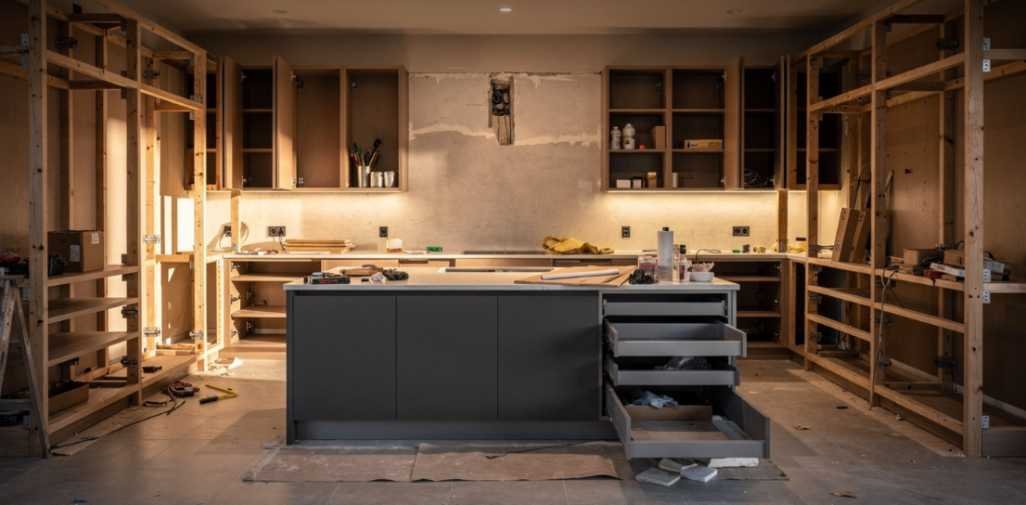
Your Layout Needs Major Changes
Refacing locks you into the existing footprint.
If you want a kitchen island, wider walkways, relocated appliances, or deeper storage drawers, replacement becomes necessary. Structural redesign requires entirely new cabinet configurations.
This is especially true for homeowners trying to create open-concept kitchens.
Your Cabinets Have Structural Damage
Refacing cannot fix rotting wood or warped particle boards.
Cabinets near sinks often develop hidden moisture damage over time. If the boxes feel soft, swollen, or unstable, replacement is safer and smarter.
Many low-cost cabinets installed during the early 2000s used poor-quality particle boards that deteriorated quickly after water exposure.
You Want Maximum Storage Upgrades
Modern kitchens rely heavily on functionality.
Deep drawers, hidden trash pullouts, lazy susans, appliance garages, and vertical tray storage often require entirely new cabinet systems.
Some refacing projects allow upgrades like soft-close hinges and pull-out baskets, but replacement offers far more flexibility.
The Hidden Costs Most Homeowners Miss
Many remodeling budgets explode because homeowners focus only on cabinet pricing.
The real expense comes from secondary work.
Full cabinet replacement often triggers:
- Countertop replacement
- Plumbing relocation
- Electrical adjustments
- Drywall repair
- Backsplash replacement
- Flooring patchwork
I have seen “affordable” cabinet quotes grow by thousands once demolition began.
Refacing avoids many of those chain-reaction costs because the existing structure stays intact.
That makes it especially attractive for homeowners already investing in other upgrades like flooring or using detailed diy kitchen remodel tips to manage costs strategically.
Preserving Countertops and Backsplash During Refacing
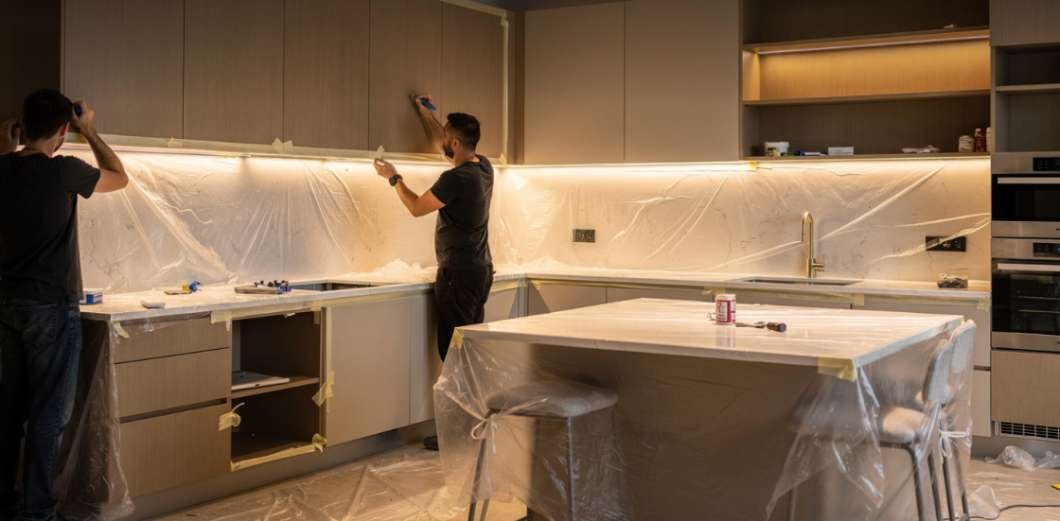
This is one area where refacing clearly dominates.
Why Refacing Protects Existing Surfaces
The countertop slab remains fully supported during the entire project. Installers apply veneer directly against the existing seams without prying apart stone or tile.
That dramatically reduces the chance of:
- Granite cracks
- Quartz chipping
- Broken backsplash tiles
- Caulk separation
- Laminate edge damage
The Surface Protection Method Contractors Use
Experienced installers typically:
- Cover countertops with moving blankets
- Tape backsplash edges carefully
- Use painter’s tape along cabinet seams
- Avoid heavy demolition tools completely
These small details prevent expensive accidents.
DIY Cabinet Refacing: What I Learned the Hard Way
DIY refacing looks deceptively simple online.
The measuring stage is where most mistakes happen.
Accurate Measurements Matter More Than Anything
Changing overlay styles changes door sizing completely. Even a small measurement error creates uneven gaps that become obvious immediately.
I recommend ordering sample doors first before committing to a full project.
Popular suppliers include:
- Barker Door
- Cabinet Now
Surface Prep Determines Veneer Success
Grease ruins adhesive bonding.
Many DIY failures happen because homeowners skip degreasing. Using Trisodium Phosphate before sanding dramatically improves adhesion.
Humidity also matters. Veneer adhesive bonds poorly in extremely humid kitchens.
Hardware Alignment Requires Precision
Crooked cabinet pulls instantly expose amateur work.
Using a drilling template creates consistent spacing across all doors. Concealed hinge jigs also make installation easier.
Tools from Kreg help create cleaner hinge placement with fewer mistakes.
Cabinet Materials That Should Never Be Reused
Not every cabinet deserves refacing.
Avoid refacing if your cabinets contain:
- Water-swollen particle board
- Mold growth
- Severe warping
- Termite damage
- Broken structural joints
Solid plywood cabinets typically respond best to refacing projects.
Cheap thermofoil cabinets often deteriorate too badly for reliable veneering.
Does Refacing Increase Home Value?
Yes, especially in mid-range homes.
Refacing delivers one of the best visual return-on-investment upgrades because kitchens heavily influence buyer perception. Buyers notice modern cabinet doors immediately.
However, replacement may create greater value if the kitchen layout feels outdated or dysfunctional.
A remodeled kitchen with poor workflow still feels old, regardless of cabinet color.
FAQs
1. Is cabinet refacing cheaper than replacing?
Yes. Refacing usually costs 30% to 50% less because the existing cabinet boxes remain in place.
2. Can you reface cabinets without removing countertops?
Yes. That is one of the biggest advantages of refacing. Existing countertops stay fully supported during installation.
3. Does cabinet refacing damage backsplash tile?
Proper refacing should not damage backsplash tile because installers avoid demolition around the wall surface.
4. How long does cabinet refacing last?
High-quality refacing can last 15 to 20 years when installed correctly and maintained properly.
5. Is DIY cabinet refacing worth it?
DIY refacing can save money, but precise measuring and surface preparation are critical for professional-looking results.
Your Kitchen Does Not Need a Financial Meltdown
A beautiful kitchen does not always require full demolition.
If your cabinet boxes remain solid and your layout already works, refacing can completely transform the space while protecting your countertops, backsplash, and sanity. I honestly think many homeowners underestimate how much visual impact new doors, veneer, and hardware create.
But if your kitchen workflow frustrates you daily, replacement may finally solve deeper functional problems.
Before signing any contractor proposal, inspect your cabinet boxes carefully. That single step often reveals whether you need a cosmetic refresh or a full structural reset.