Family kitchens hold decades of memories, from rushed morning breakfasts to late-night conversations over tea. As parents and grandparents grow older, those familiar spaces should continue feeling comfortable and easy to use. A thoughtful kitchen design for elderly homeowners makes everyday cooking safer, smoother, and far less physically demanding without sacrificing beauty, warmth, or modern style.
Key Takeaways
- Wide layouts improve safety and mobility
- Smart storage reduces bending and reaching
- Better lighting helps prevent accidents
- Accessible appliances make cooking easier
- Stylish senior-friendly kitchens can still feel modern
Why Safe Kitchen Spaces Matter For Seniors?
Aging in place has become one of the biggest priorities in modern home remodeling.
The kitchen is often the most used room in the house, but it can quickly become difficult for seniors with reduced mobility, arthritis, vision loss, or balance issues. Slippery flooring, poor lighting, and awkward storage can create daily frustration and increase accident risks.
A well-planned kitchen design for elderly homeowners focuses on ergonomic accessibility, visibility, and safer movement. Universal design principles help create a kitchen that supports independence while still looking elegant and welcoming.
Modern senior-friendly kitchens no longer feel clinical or outdated. Today’s accessible kitchen designs combine sleek finishes, smart technology, and functional layouts that blend naturally into beautiful interiors.
Smarter Layout Ideas For Aging Seniors Place
A safer kitchen always starts with an easier layout.
Clear Walkways And Open Space
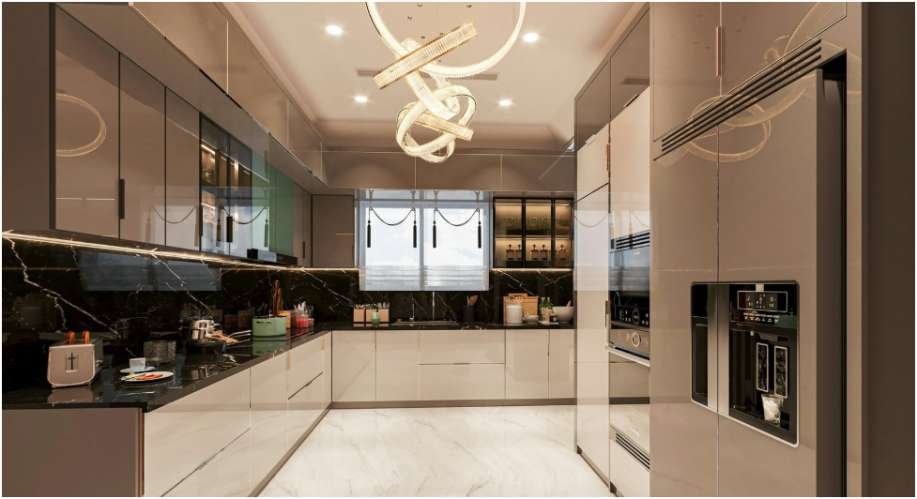
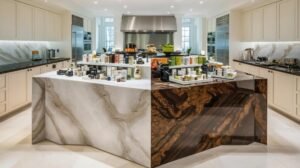
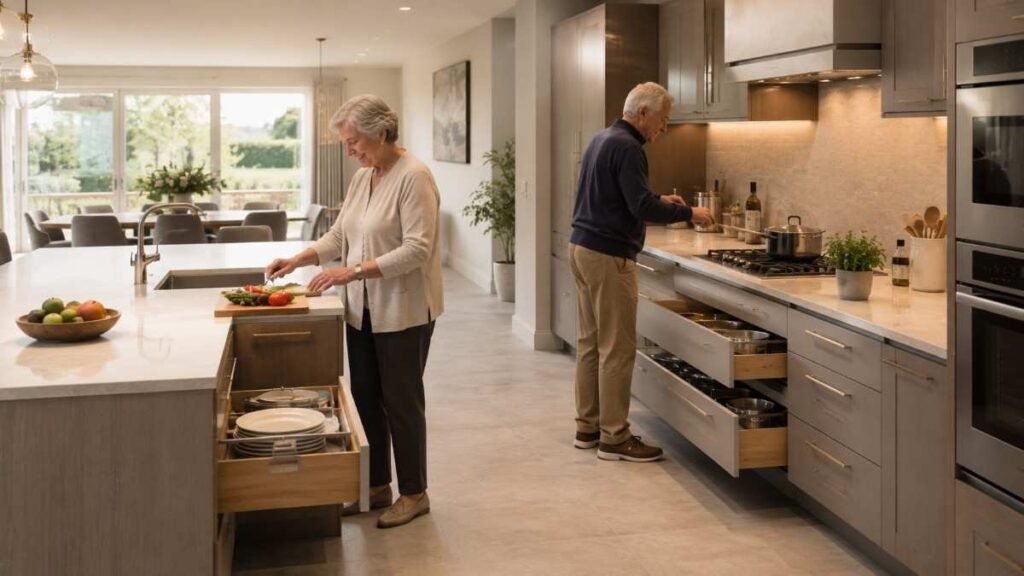
Narrow walkways make movement difficult for seniors using walkers or wheelchairs. Designers now recommend maintaining at least 42-inch pathways for comfortable navigation, while wheelchair-accessible kitchens often require up to 60 inches for turning space.
Open floor plans also reduce visual clutter and improve mobility. Seniors can move between prep zones, appliances, and dining areas more comfortably without bumping into corners or cabinets.
Spacious layouts also improve lighting distribution and visibility throughout the kitchen. This creates a calmer, more organized cooking environment that feels both functional and inviting.
Multi-Level Countertops
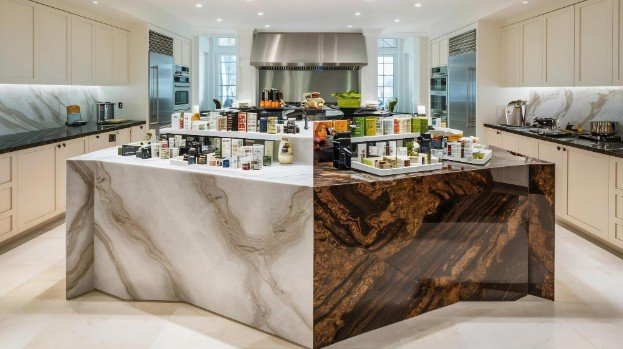
Traditional countertops may become uncomfortable for seniors who struggle with standing for long periods. Multi-level countertops solve this issue by combining standard 36-inch counters with lowered 30-to-32-inch prep spaces for seated cooking tasks.
Lowered workspaces improve accessibility while reducing strain on shoulders, knees, and the lower back. This setup is especially helpful for elderly homeowners with limited mobility or wheelchair needs.
Modern kitchen designers often incorporate these lower surfaces seamlessly into islands or side counters so the space still feels stylish and cohesive.
Open Knee Spaces
Accessible kitchen design should include open knee clearance beneath sinks and prep stations. These open spaces allow seniors to sit comfortably while washing dishes, preparing meals, or using the cooktop.
Finished knee spaces also improve wheelchair accessibility while creating a more flexible cooking experience. The kitchen becomes easier to use for every stage of life.
Smart Storage Solutions
Easy-access storage can completely change how seniors experience their kitchen.
Drawers Over Cabinets
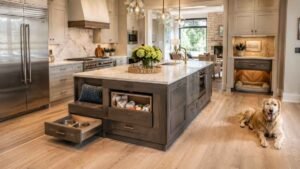
Traditional lower cabinets force seniors to kneel, bend, or stretch awkwardly to reach cookware. Replacing these cabinets with full-extension deep drawers keeps everything visible and easier to access.
Soft-close drawers also improve safety by preventing slamming and reducing strain on arthritic hands. This simple upgrade makes kitchens more comfortable without changing the overall design style.
Deep pull-out drawers work especially well for heavy pots, pans, and small appliances that would otherwise require lifting from low cabinet spaces.
Pull-Down Shelves And Slide-Out Pantries
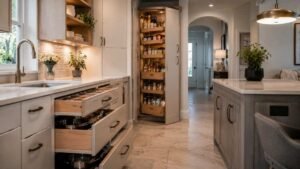
Upper cabinets often become unsafe for elderly homeowners who struggle with reaching overhead. Pull-down shelving systems safely bring stored items down to chest height for easier access.
Slide-out pantry systems are another smart addition in kitchen design for elderly homeowners. Instead of reaching into dark shelves, seniors can easily see and access dry goods from every angle. Motion-friendly storage creates a more organized kitchen while reducing unnecessary physical strain during everyday tasks.
Easy-Grip Hardware
Small cabinet knobs can become painful for seniors with arthritis or reduced grip strength. Large D-shaped pull handles are much easier to hold and operate comfortably.
These ergonomic hardware choices also look modern and sleek, making them a perfect fit for contemporary cabinets and kitchen designs focused on both beauty and functionality.
Safer Appliances And Fixtures
Smart appliance placement improves safety while making kitchens easier to use daily.
Elevated Ovens And Microwaves
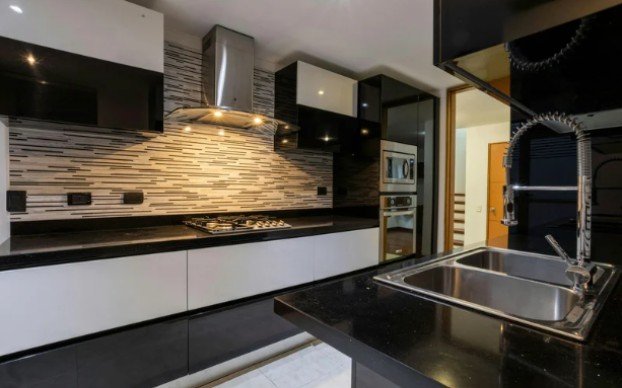
Wall-mounted ovens and microwaves reduce the need for dangerous bending while handling hot dishes. Placing appliances at chest height improves comfort and lowers the risk of burns or spills.
Accessible appliance placement also creates smoother movement between prep and cooking zones, making the kitchen more efficient overall. Many modern kitchen remodels now prioritize elevated appliances as part of aging-in-place renovations.
Induction Cooktops And Front Controls
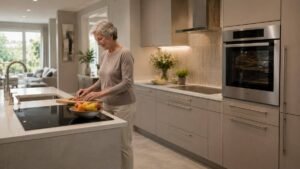
Induction cooktops are one of the safest choices for elderly homeowners because the surface does not stay dangerously hot after cooking. This significantly reduces accidental burn risks.
Front-mounted controls also improve accessibility because seniors no longer need to reach across hot pots or pans to adjust temperatures. These safety-focused upgrades fit beautifully into modern kitchen aesthetics while improving everyday confidence during cooking.
Better Refrigeration Choices
French-door and side-by-side refrigerators make food easier to access without excessive bending or stretching. Frequently used items stay within comfortable arm’s reach. Well-organized refrigeration also improves kitchen workflow and reduces unnecessary movement around the space.
Lighting And Flooring That Improve Safety
Small visual upgrades can make a huge difference in senior-friendly kitchens.
Task Lighting And Visibility
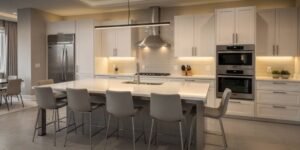
Poor lighting is one of the leading causes of kitchen accidents among older adults. Under-cabinet LED task lighting improves visibility in food prep zones while reducing shadows.
Motion-activated cabinet lighting also helps seniors find items more easily inside deep drawers and pantry spaces. Better lighting creates a safer and more comfortable cooking environment.
Layered lighting with pendants, recessed fixtures, and natural daylight also gives kitchens a brighter and more welcoming atmosphere.
Contrast Finishes
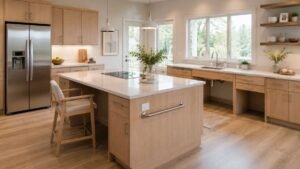
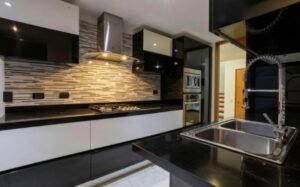
Low-contrast kitchens may look trendy, but they can become difficult for seniors with declining depth perception. Designers often recommend contrast finishes between countertops, cabinetry, and flooring to improve visibility.
Contrasting edge details help elderly homeowners identify surfaces more clearly while moving through the kitchen safely. This approach supports accessibility without compromising the overall visual style of the space.
Slip-Resistant Flooring
Glossy floors may appear luxurious, but they can become extremely slippery when wet. Textured porcelain tile, matte vinyl flooring, and cork flooring provide much better traction for seniors.
Cushioned flooring materials also reduce pressure on joints and help minimize fatigue during long cooking sessions. These materials combine comfort, durability, and modern design appeal.
Planning for Easy-To-Use Kitchen For Senior Homeowners
Creating the ideal kitchen design for elderly homeowners starts with evaluating daily routines and mobility needs. Walk through the kitchen and identify areas that require excessive bending, stretching, lifting, or twisting. Improving those pain points first creates immediate functional benefits.
Next, focus on accessible kitchen layouts that support safer movement and easier cooking. Install wider walkways, multi-level countertops, better task lighting, and smart storage solutions that reduce physical effort throughout the space.
Finally, combine these practical upgrades with timeless kitchen finishes and warm design elements. Multifunctional cabinetry, natural textures, ergonomic hardware, and layered lighting help create a kitchen that feels modern, welcoming, and comfortable for long-term aging in place.
Frequently Asked Questions
1. How to organize a kitchen for the elderly?
Store everyday items at waist level, use pull-out drawers, improve lighting, and keep countertops clutter-free for safer and easier kitchen movement.
2. What is the 60 30 10 rule for kitchens?
The 60-30-10 rule balances kitchen colors using 60% dominant color, 30% secondary color, and 10% accent color for visual harmony.
3. What is the best style of house for the elderly?
Single-story homes with open layouts, wider doorways, and accessible kitchens are often the safest and easiest for elderly homeowners.
4. Is $30,000 enough for a kitchen remodel?
Yes, $30,000 is usually enough for a mid-range kitchen remodel that includes accessibility upgrades, lighting improvements, and modern appliances.
Final Thoughts From The Heart
A well-planned kitchen design for elderly homeowners should feel safe, functional, and genuinely enjoyable to use every day. The best aging-in-place kitchens combine accessibility, ergonomic comfort, and timeless style without making the space feel overly medical or restrictive.